
Asia TEFL jobs
China, South Korea, Japan, Vietnam, Taiwan and Thailand remain some of the biggest TEFL markets. Formal visa routes frequently require a degree, while salary and benefits vary sharply by country.
Multi-currency checkout: USD, GBP, EUR, AUD and CAD.
Teaching English abroad and online are two very different job markets. Start with the kind of work you want, then check the degree, visa and TEFL requirements before you spend money or apply.
StudyTEFL's jobs hub connects you to online teaching companies, regional recruiter resources, job-board links and country guides, while keeping the qualification side clear.

Compare 40 online English teaching companies and platforms, including no-degree routes, degree-required roles, pay, commissions and direct application links.
SEE ONLINE TEFL JOBS →Browse regional resource pages covering Asia, Africa, South America and the Middle East, with recruiter links, job boards, visa context and country guidance.
BROWSE REGIONS →Some online platforms and some overseas routes can work without a bachelor's degree. The options are narrower, so check the actual employer before applying.
SEE NO-DEGREE OPTIONS →Use the regional resource pages and country guides to check qualification expectations, recruiters, job boards, likely pay and visa realities.
GO TO REGIONS →China, South Korea, Japan, Vietnam, Taiwan and Thailand remain some of the biggest TEFL markets. Formal visa routes frequently require a degree, while salary and benefits vary sharply by country.
UAE, Saudi Arabia, Qatar, Oman and neighbouring markets can offer strong salary and benefits packages, but degree, experience and documentation requirements are often stricter.
Colombia, Brazil, Chile, Peru and Argentina can suit teachers prioritising culture and lifestyle over maximum savings. Many roles are local-hire and requirements vary.
Morocco, Egypt, Kenya, Ghana and other markets offer a mix of language-school, private-school and volunteer opportunities. Degree expectations and pay vary widely.
Spain, Italy, Czechia, Poland and other European markets can be attractive, but right-to-work status, citizenship and local hiring rules can matter as much as TEFL itself.
If relocation isn't the goal, compare 40 online teaching companies and marketplaces, including flexible no-degree routes and higher-barrier specialist employers.
You can target a much wider range of formal work-visa routes, especially in major Asian and Middle Eastern markets. A 120-hour TEFL certificate is then often the additional teaching credential employers ask for.
Degree requirements usually come from employers or immigration rules, not from TEFL course providers.
You still have options. Online marketplaces can be especially useful, and some overseas markets are more flexible than others. But don't trust generic lists that say a country is “no degree required” without checking the current legal work route.
Your safest approach is employer-first research: find live jobs you qualify for, then get the training they actually ask for.
Can the employer actually sponsor the visa or work permit required for your nationality?
Is the degree required by the employer, the visa, or both?
Does the advert ask for 120-hour TEFL, Level 5, CELTA or another named qualification?
Compare salary with rent, tax, unpaid prep, transport, commission and local cost of living.
Check teaching hours, office hours, probation, cancellation rules, notice period and deductions.
Degree, police check and TEFL certificate may follow different apostille or authentication routes.
Our regional pages focus on recruiter links, major job boards, country requirements, visa context and practical job-search information rather than constantly changing vacancy lists.
That keeps the public resources useful and stable, while enrolled StudyTEFL students get the more valuable regularly updated jobs content inside the LMS.
Recruitment for eligible native English speakers seeking South Korea placements.
VISIT GONE2KOREA ↗Dedicated Vietnam teaching vacancy board covering multiple age groups.
VISIT VIETNAM JOBS ↗Useful for international schools, recruiters and larger language companies. Verify the poster before applying.
SEARCH LINKEDIN ↗Never pay a recruiter for the privilege of getting hired. Legitimate recruiters are normally paid by the employer. Be cautious with requests for upfront placement fees, vague visa arrangements, unusually high salaries with no detail, or pressure to send sensitive documents before the company is verified.
Public job pages age quickly. Instead of filling this page with vacancies that can disappear days later, StudyTEFL students get access to a regularly updated jobs resource inside the LMS.
Use our regional pages to understand where to teach, what employers usually ask for, which recruiters and job boards are worth checking, and what documents or visa requirements may apply.
We'll also maintain a separate public taster page with a small selection of current opportunities.
Access our regularly updated jobs resource inside the LMS, with hand-picked opportunities and links for applying.
This is part of the job-support bundle included with the 120-hour Complete TEFL course.
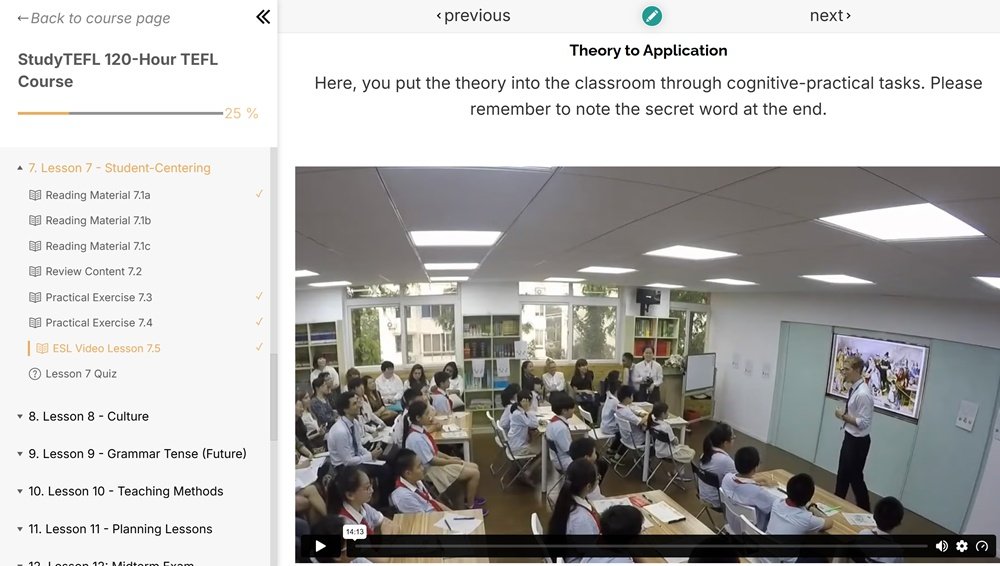
StudyTEFL's 120-hour Complete TEFL is $39 and includes 24 core units, six complete ESL lesson videos, 15+ teaching scenarios, human-voice video and audio, tutor support, online-teaching content and QR-verifiable certification.
Check the jobs first. If the employers you want ask for standard 120-hour TEFL, you don't need to spend hundreds just to tick the training requirement.
Browse online companies, regional recruiter resources and country guides. If standard 120-hour TEFL fits your target roles, StudyTEFL's Complete course is $39.